
Wading into the Artificial Waters
(or) How I’m using AI lately

Editor’s note: Before we jump in, I know plenty of folks are Anti-AI, do not pass GO, full stop, no exceptions. And by that they mean they’re not making queries to a large language model (LLM) with a chat interface, they find the whole thing a reprehensible waste of time, money, and resources, and they’re likely not-so-silently judging anyone who does. Which is a completely understandable and defensible hard line position I can empathize with, even if it’s not the stance I’m entertaining because ~reasons~.
As a designer by trade, working in and adjacent to the tech industry, I can choose to ignore new tools and technological advances if I want to be on the business end of that Eric Shinseki gem: “If you don’t like change, you’ll like irrelevance even less.” I’ve never exactly considered myself an early adopter, but I’m generally peripherally aware of what’s shifting on the horizon. The future is here, it’s just not evenly distributed yet. And since I’m curious by nature, I like to take things for the proverbial spin before I make an assessment. So… AI.
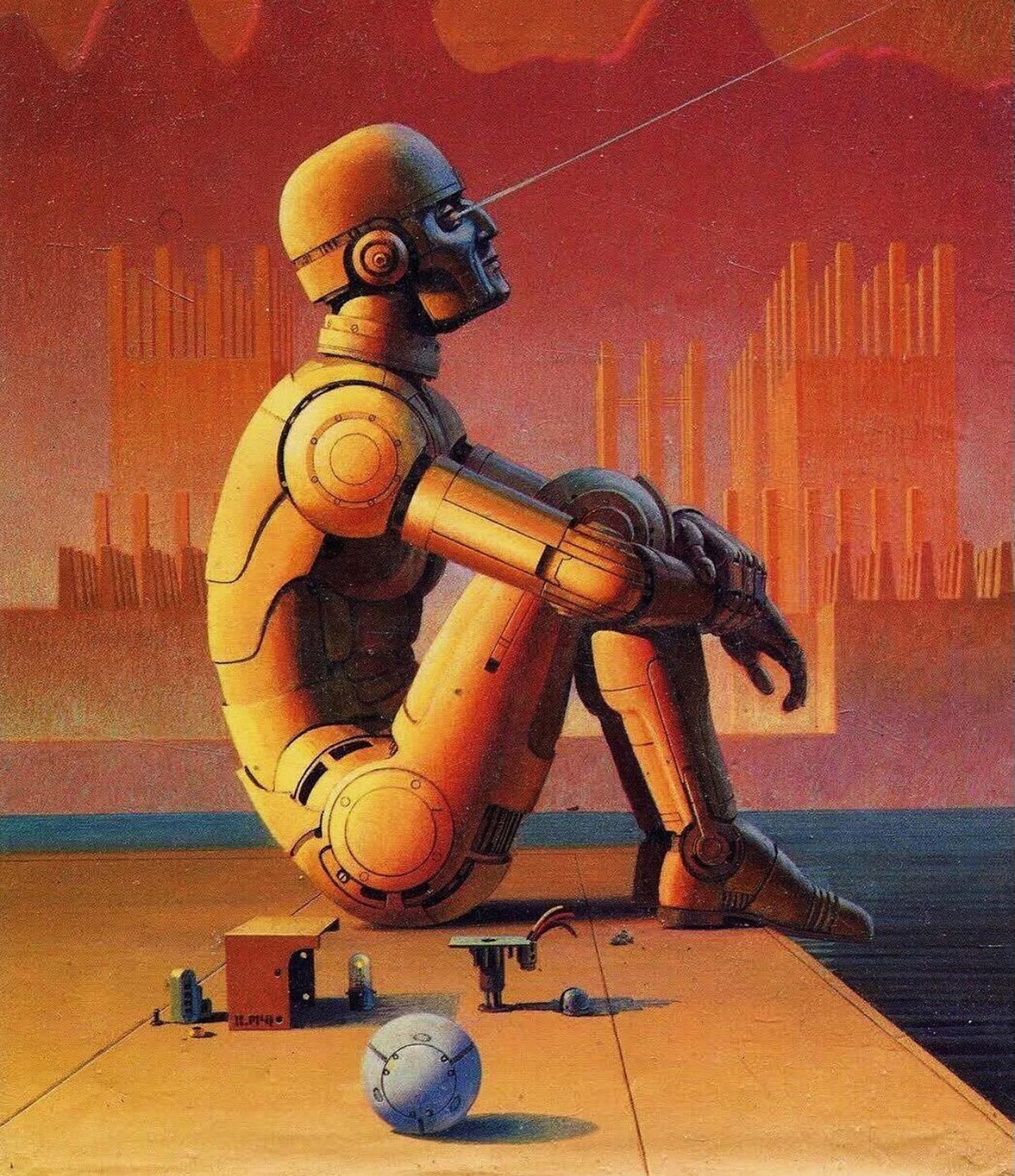
We can’t have a design tools conversation in 2026 without talking about the artificial elephant in the room. AI — however you want to describe the myriad of machine learning programs, LLMs, agents, predictive algorithms, and other tidbits changing near daily — is here to stay. Probably. And it has drastically reshaped my industry over the last five years. Yours, too.
Like most new technologies, I have a few options. I can adopt the hardline position against, fully embrace it, or put some brain power into figuring out how it might change the ways I work and my approach to craft. When it comes to new tech, I tend to favor cautious curiosity and research over binary stances.
Plenty of folks think it’s a bubble — after all, we’ve barely recovered from we’re all gonna live forever in the metaverse, the blockchain will fix everything, and people mortgaging houses to buy JPEGs of cartoon monkeys. Plenty of other folks think we’re at the beginning of a true transformation event. But expecting things to “go back to the way they were” is a foolish passivity which both my curiosity and my bank account simply don’t have time for. The future is here, and I can’t call it quits to shuffle off into the woods to live off the land in a yurt full of books. (Yet.)
Steeping with the enemy
I’m currently exploring a few AI tools in my workflow. I mostly use Claude from the company Anthropic. I like it better than its competitors for a variety of reasons that aren’t worth digging into in this post. (I’m also in a testing phase on their Claude Code product, which is more like a command line interface than a chat interface.)
Here’s a short list of the ways I’ve used Claude this month:
As a more robust Search Engine Replacement
Ironically, as Google has jammed more and more AI features into its products, their flagship product Google Search has become nearly unusable for me. Too much noise, not enough signal, and often just flat out wrong.
I certainly don’t use an AI interface for every search engine request. No need to rumble a bunch of web servers to life in rural Virginia to find out my local Thai takeout spot’s business hours. But for more complex, nuanced questions with specific parameters (both expressly stated and previously given as guardrails), it’s a useful tool. I can get a reasonably sound answer in a format I can quickly process and use. I can also build on those answers with clarifying followups.
This process feels very similar to the ways I’ve used the early internet in conjunction with the local library. Ask, process, branch, collect, connect, repeat. And while I don’t believe LLMs know things exactly, they pattern match increasingly well, so pairing them with my own knowledge base (and a healthy bullshit detector) makes for an effective and efficient set of tools.
As a Junior Web/App Developer & Code Assistant
This idea of AIs replacing jobs is simultaneously very real (look at the layoff numbers in tech over the last three years) and very not real (look at the hiring in tech happening right now). It’s a Schrödinger’s (AIpo)cat(lypse) sort of thing. (Editor’s penance: I am so so sorry.)
I know multiple web and product agencies who are doing the same volume and level of output from a few years ago, but now with a fraction of the employees. The key differentiator isn’t just AI. The key is talented, senior people who were already extremely knowledgeable individual contributors and good at knowing what they want and how to articulate it. In other words, if you’re a developer AI might not take your coding job, but someone like you who knows how to leverage AI most likely will.
I’ve been making things on and around the internet for the better part of 25 years. I have a very particular set of skills. Skills I have acquired over a very long career. Skills that make me a nightmare for fitting in to any semblance of an org chart. But skills that make it trivially easy to have an idea, brand the idea, buy a URL, and launch a website and fully-formed brand in the span of an evening. Give me a week, I’ll give you a world.
But there has always been an upper limit to my development skills. I’d piece together a few tutorials, then hit a wall where it seemed I was missing a specific skill or piece of knowledge the author assumed I had. I’d get product ideas I knew I couldn’t complete without (expensive) help, and abandon them. I’d cry over a Wordpress loop that kept inexplicably failing at 3am (true story, and more than once).
And now? I’ve built multiple little ideas from my Backlog of Ideas in a weekend or a day, using Claude as my copilot. I doubt everyone can do this (yet). But I know how to describe what I want, enough about the code required to pull it off, and I’m decent at understanding how to edit its sometimes bloated or incorrect outputs. I use AI as a code assistant nearly daily, and that process has encouraged me to try bigger and more complex, integrated things (currently I’m “sketching out” a small Mac OS desktop app).
As a Junior Copywriter/editor & Dictionary/Thesaurus
Do I want AI to write the things I read? Hell, no. I spend a not-insignificant amount of my time trying to grow the writing community where I live. I want humans to write. I want to hear what they have to say. I want their unique voices and tone and experiences to come through. I long for gorgeously-pausing em dashes lovingly-placed by human hands. If you couldn’t be bothered to write it, why should I be bothered to read it? You’ve seen things; the AI has not. (Unless we’re talking about C-beams glittering in the dark near the Tannhäuser Gate.)
But what I don’t need to do is break out my bookshelf thesaurus to find 50 ways to say “leave your lover” just to write a blog post. Computers are, simply put, better at certain things than we are. Faster, more efficient. I don’t feel bad about offloading the occasional bit of the early stages of copywriting grunt work to an LLM so that I can focus my writing on when and how to use the right words. I want to spend my time on diction, phrasing, and pacing. And yeah, I get how “we shape our tools and then our tools shape us” and all. I understand introducing any tool to a creative process will change the process, which eventually changes the output. Which is why we try things. Then assess. Then try some more.
I’m certainly not above the mundane aspects of the work, but I also enjoy not having to spend an hour a day hauling fresh water up the hill from the well, or hunting for my dinner. Technology does, on occasion, support human flourishing.
Some examples of writing prompts from my chat history:
Copywriting: What are alternate words for “literary”? Give me a list of 50 examples, ordered from more concrete/common to more abstract/weird. Ignore any words used in the attached piece of writing.
Copyediting: Examine these six company core values, and rewrite them to match verb tense, showing multiple examples of consistent sets (e.g. Present Simple, Present Continuous, Present Perfect)
Researching: Give me a list of 100 uncommon five-syllable verbs and five-syllable nouns in alphabetical order, excluding any proper names or medical terms.
Did I take any of those outputs and ⌘C+⌘V to publish? Of course not. Did elements of those outputs make it into final work? Most likely yes. Would each of those tasks have previously taken up a huge chunk of my workday? Oh, yeah. Is my writing better or worse for having a digital assistant handle those tasks? I suppose time will tell. The results certainly surfaced things I wouldn’t have found on my own.
Try, assess, repeat.
Wall-E was a prophet
The ways I’m using AI can hypothetically help me be more efficient. The problem I see with efficiency as a goal is what’s the reward for efficiency? More work? That seems counter-intuitive. I don’t want tools that function so well they give me more work. The value proposition of efficiency is quantitative, not qualitative.
I want my tools to work with me, not fight against me. And if you’re giving me more work, you’re against me. Because what I want on a grander scale is to focus on what matters to me and my family, to make good things with good people, and to feel a sense that the technology I choose helps me do it. And preferably does all that while aligning with my values and worldview. I suppose that’s the rub, right?
AI in its current form is powerful. It can help us do some pretty incredible things already, and to sneak a brief sports metaphor in, we’re still in early innings. AI is also kinda stupid in myriad ways, is still biased to its creators, and helps people make and consume a bunch of slop. Nom nom nom. We love the slop. Wall-E was a prophet.
I understand and empathize with my design peers who think the whole of AI is a big scam. And I understand and empathize with my design peers who think anyone not exploring AI right now are going to be left behind. I’m not so doom and gloom that I feel like I’m condemned to use the tools of my enemy to defeat them. I think of it more like this: we’re confronted with a rapidly-evolving technological reality that contains multitudes — both scarcity and abundance, good and bad, generative and consumptive, art and slop. And I’m working to create the structure and margin to allow myself the necessary time to sort out what I believe about it, how I will or won’t leverage it, and what I can create with or without it.
More human than human
I want to explore how tools like AI can help create margin so I have more space to figure out better rituals that produce more exciting ideas and work. I am convinced that I want my tools to help me be more of myself. I want to write more like me. Design more like me. Plan more like me. Heck, even code more like me (whatever that is — you’re listening to guy that once shipped the CSS “border: 24px solid gold” to production because no one was there to stop me). I want to come at things from different angles and approaches because I have the margin to be myself.
After all, everyone else is already taken.